Journey through the great
northern lands named “Mosir”
For millennia, Hokkaidō has followed a path uniquely its own. The island preserved the spirit of the Jōmon era (circa 14,000–300 BCE). Through later exchanges with Honshū, mainland Japan, this cultural interplay gave rise to the Satsumon tradition—where agriculture, iron tools, and new patterns of settlement merged with indigenous lifeways, forming a cultural bridge that would ultimately lead to the emergence of the Ainu civilisation. Encounters with the peoples of Okhotsk brought northern and southern worlds together, shaping a cultural mosaic found nowhere else in Japan. This quiet unfolding of history has given rise to a land where ancient philosophies—of living in harmony with nature and honouring the rhythms of existence—still resonate in every corner. It is this enduring ethos that makes travelling through Hokkaidō so profoundly meaningful. The indigenous Ainu called this northern realm Mosir—a name born of its breathtaking beauty, evoking an endless garden crafted by the gods. Volcanoes, forests, lakes, wetlands, rivers and seas are not separate entities here, but threads in a single, living tapestry that sustains the vitality of life. Moments of exquisite encounter—visible only in that fleeting instant—stir the human soul and remind us that divine presence still lingers in the land. To walk this long road on foot is to stand at the crossroads of history and culture, and to engage in a quiet dialogue with life itself—past, present and yet to come. It is a continuous story from ancient times, written across landscapes and lifetimes, waiting to be felt with every fibre of your being.
Concept
- - Walk the road where
the “Kamuy” dwell in all things,
Touch the timeless sprit of prayer. -


Hokkaido: A Living Story of Nature and Spirit
The Jōmon Legacy
Long before rice cultivation, the Jōmon people of Hokkaido lived as hunter-gatherers—yet formed remarkably sophisticated, settled communities. Their worldview was shaped by animism: reverence for nature where gods were not distant deities, but mountains, rivers, animals, and trees. This philosophy of equality and gratitude permeated daily life.
While rice farming ended the Jōmon era in mainland Japan around 3,000 years ago, Hokkaido upheld Jōmon ways for another 1,500 years. In this sense, Hokkaido’s cultural identity is a living continuation of Jōmon spirit—an ethos of coexistence, humility, and respect for the land.
-----------------------------------------------------------
The Ainu Continuum
After the long Jōmon period, Hokkaido became a crossroads—linking the emerging Yayoi culture to the south (c. 300 BCE–300 CE), known for rice cultivation and metalwork, with the maritime Okhotsk culture to the north.
From this convergence, the Ainu civilisation emerged—rooted in animism, oral tradition, and nature’s rhythms. Living in a harsh climate, the Ainu relied on hunting, gathering, and trade, while cultivating rich traditions in mbroidery, woodcraft, and ceremony.
Though academic views vary, many Ainu proudly trace their lineage to the Jōmon—not only genetically, but spiritually. Their belief in kamuy, divine beings embodied in nature, echoes ancestral reverence.
To meet the Ainu today is to encounter a living philosophy: one that honours nature’s sacredness and sees humanity as part of a greater ecological whole.
-----------------------------------------------------------
Modern Encounters and the Return to Ancestral Wisdom
The Meiji era (1868–1912) brought rapid industrialisation and population influx to Hokkaido, reshaping the land and its people. The spiritual heritage of the Jōmon and Ainu faced pressure from economic expansion and state-led development.
For many, Hokkaido’s history is framed by 19th-century reforms. Yet this view often overlooks the cultural dissonance between Meiji-era frontier ambitions—advancing agriculture and fisheries—and the Indigenous ethos rooted in ancestral lifeways.
Today, as the costs of extractive capitalism grow harder to ignore, a quiet reckoning is underway. Across Hokkaido, producers and communities are revisiting Jōmon wisdom: a philosophy of reciprocity, seasonal balance, and reverence for the land.
Rather than treating nature as a resource, there is rising momentum toward practices that honour place, memory, and interdependence. For the first time, we may be witnessing a meaningful convergence—settler innovation and Indigenous continuity, not in conflict, but in dialogue.
At its heart lies the Jōmon era: a time when humanity lived in harmony with nature for over 10,000 years, without large-scale conflict. This is not just history—it is a living model of sustainability, where every tree, stream, and creature is met with gratitude and awe, and where prayer is not ritual, but relationship.
-
-
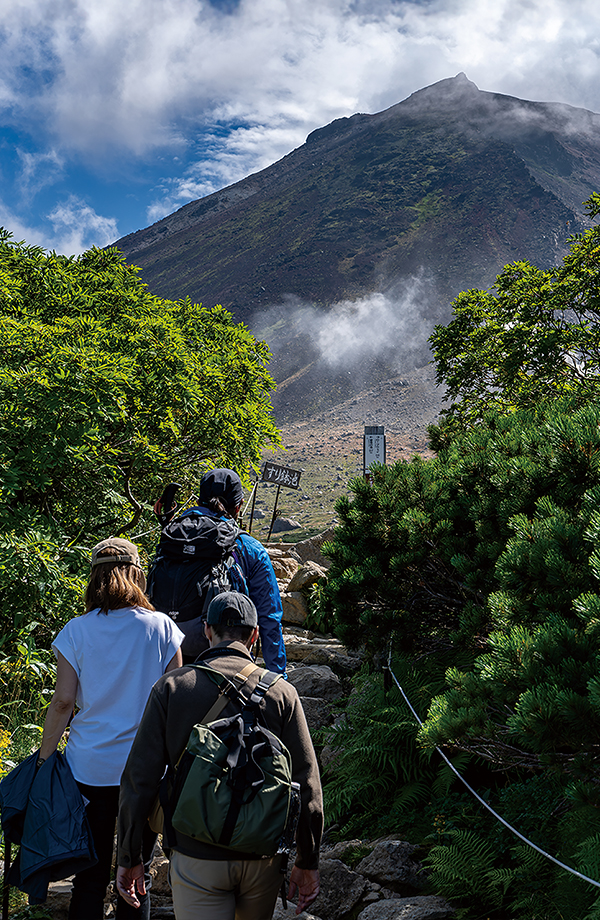
 Long-Trekking
- Trace sacred landscapes shaped and cherished by the gods. Let each step deepen your connection to the land’s quiet grandeur.
-
-
-
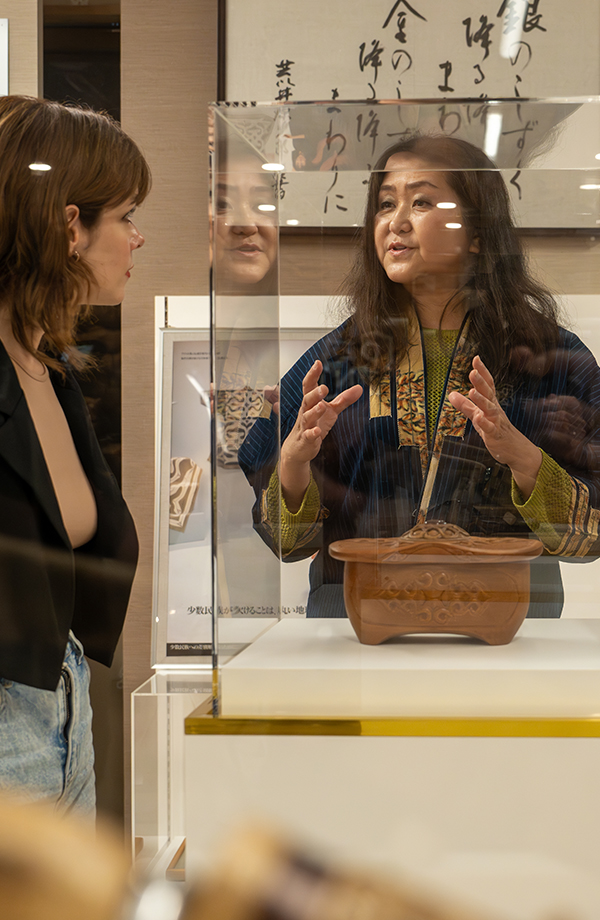
 Long-History
- Witness the crossroads where nature and humanity have coexisted for millennia. Honour the enduring spirit of this shared history.
-
-
-
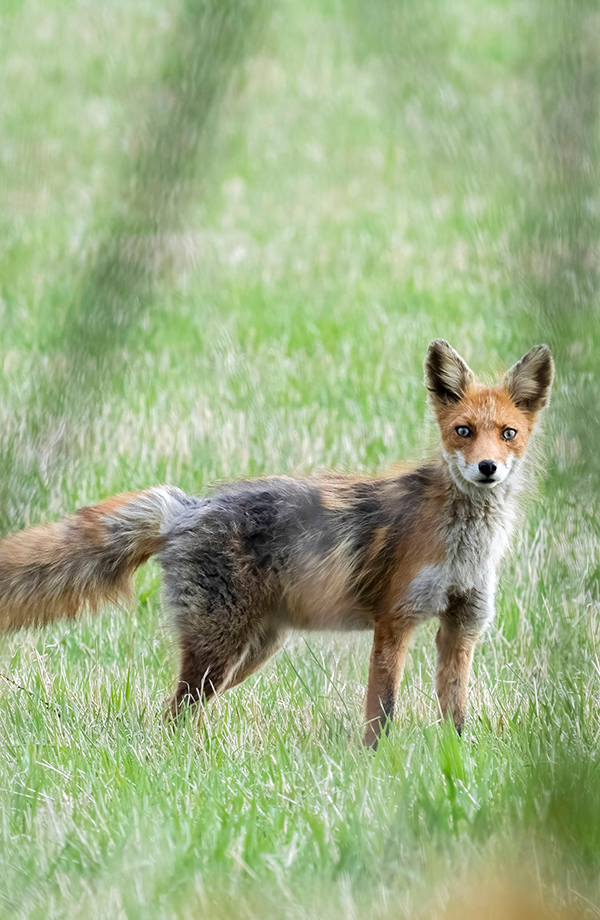
 Long-Dialogue
- Engage in a living conversation with all forms of life—carrying the wisdom of the past into a future ten thousand years ahead.
-


"THE GARDEN OF THE GODS",
as expressed in the Ainu language, is a land called, "MOSIR",
an endless garden created by their gods,
in order to cherish and revel in its beauty!


Features
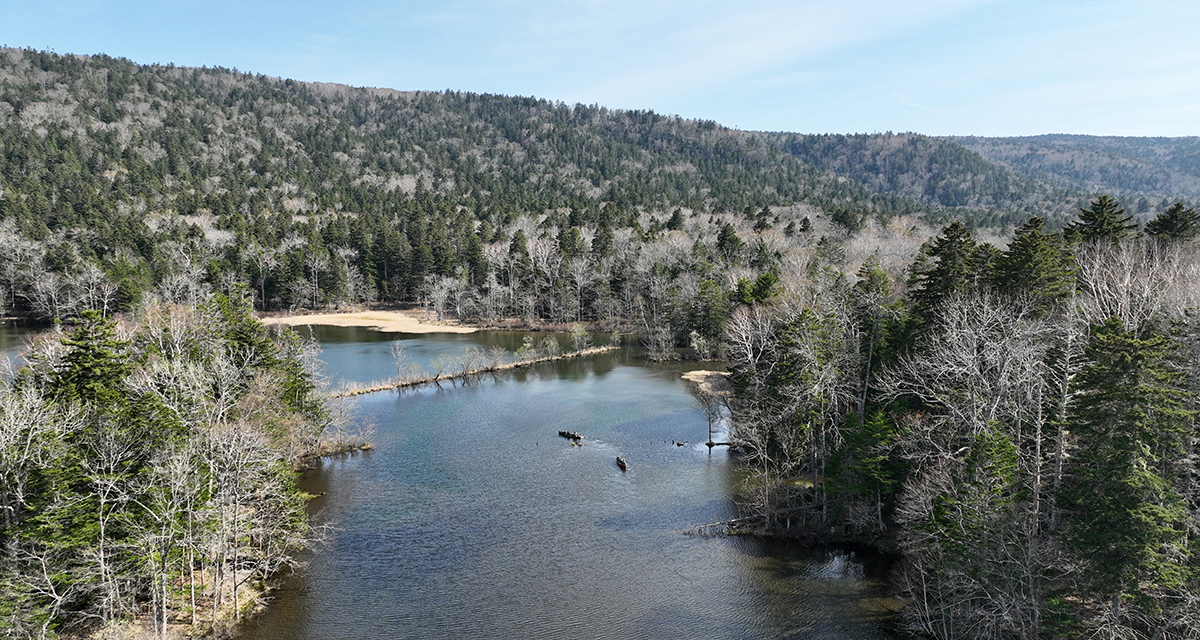
Walking the Long Story of Life:
Nature, Spirit, and Time in Hokkaido
Step into a journey shaped not by days or decades, but by millennia. Rooted in the enduring philosophy of coexistence with nature and reverence for all living things, this tour invites you to walk through Hokkaido’s wetlands, calderas, and alpine zones—landscapes that have quietly carried the stories of life for over 10,000 years.
Guided not only by what is visible, but by the unseen rhythms of time, you will encounter the spirit of those who lived in harmony with the land. Through these encounters, the long chain of life—past, present, and future—comes into view, offering a rare chance to feel its continuity with your whole being.
This is not simply a nature tour. It is a deep dive into four of Hokkaido’s national parks, where sharpened senses and open hearts reveal a narrative of resilience, gratitude, and connection. As you walk the northern earth, you may begin to sense a quiet shift within: a reconnection to the values of sustainability not as a modern ideal, but as a lived reality spanning ten thousand years.
This is a journey into the long story of life—where nature is not scenery, but teacher; and where prayer is not ritual, but relationship.
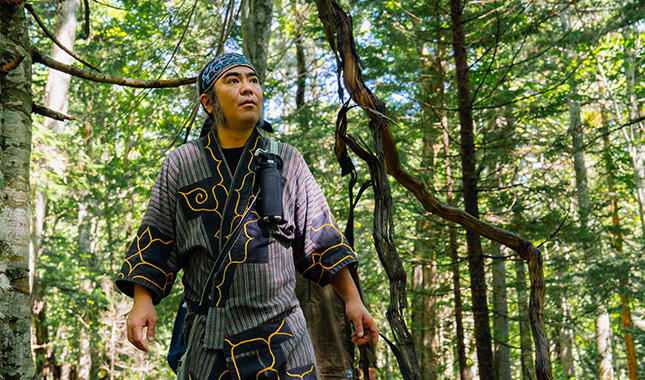
Sample Tour
Journey Through "Mosir"- Timeless Spirit of Prayer

Five Fields: Where Nature, Culture, and Time Intersect
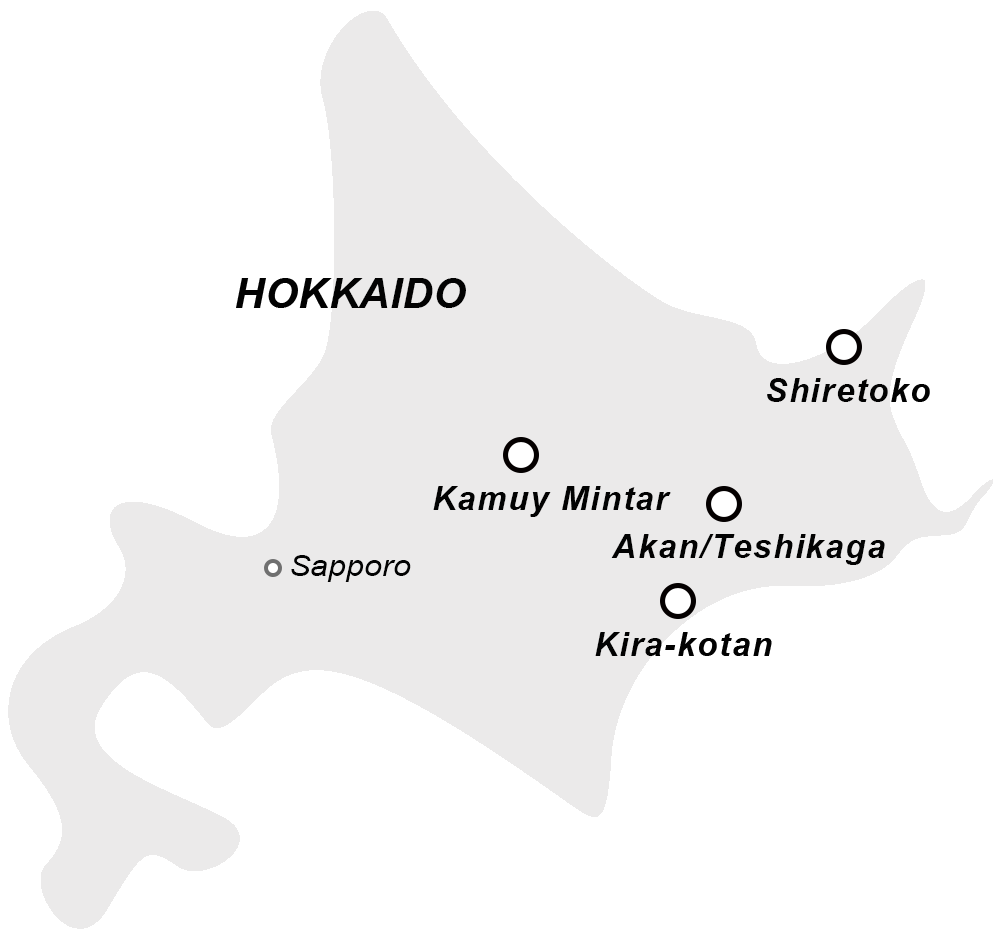
1. Kira-kotan
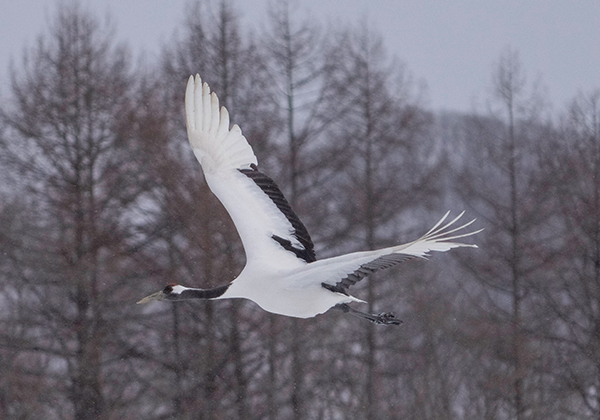
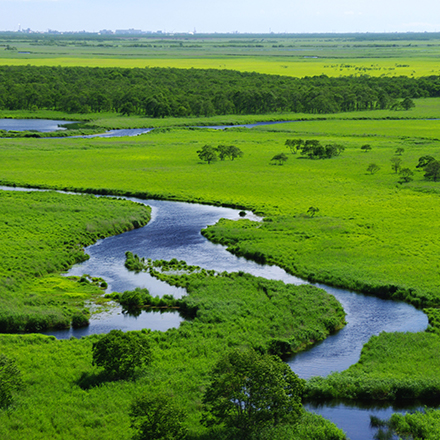
A mist-veiled wetland where life breathes quietly and the path to the open sea begins.
2. Akan
A forested sanctuary where Hokkaido’s cultural lineage and ecological care are quietly interwoven.
3. Teshikaga
A vast and ancient terrain where volcanoes, forests, and lakes converge in silent harmony.
4. Shiretoko
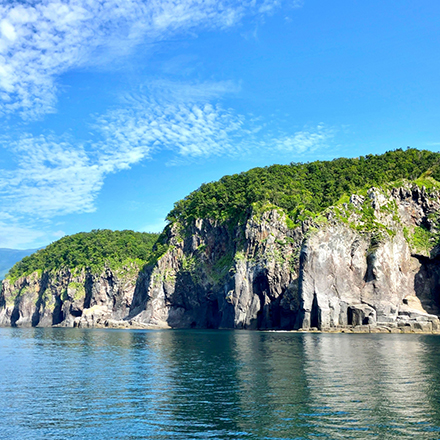
A remote peninsula guided by Kimun Kamuy—the bear spirit—where nature’s depth reveals its sacred rhythms.
5. Kamuy Mintar
An alpine sanctuary known as the “Garden of the Gods,” woven from peaks, clouds, and ancestral presence.
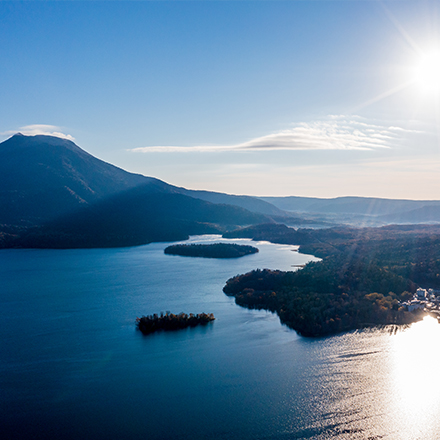
8-Day - Sample Tour
Tour DAY 1

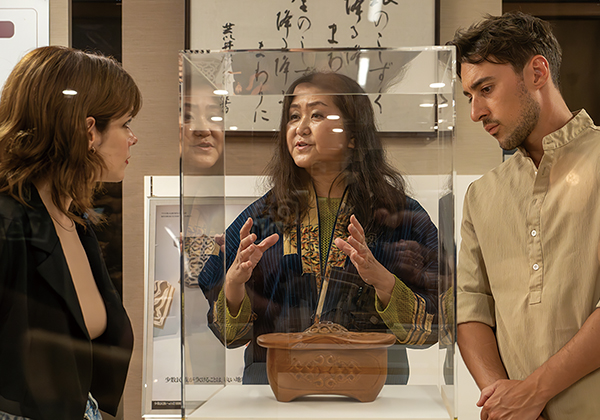
At Japan’s oldest private Ainu museum, your journey opens inside a traditional cise—a thatched house where ancestral stories still breathe.
Arrive in Hokkaido via Asahikawa Airport
Begin your journey with a cultural dialogue at the Kawamura Kaneto Ainu Memorial Museum
Check-in at your hotel in Sounkyo (2-night stay)
Tour DAY 2

Kamuy Mintar
The Garden of the Gods
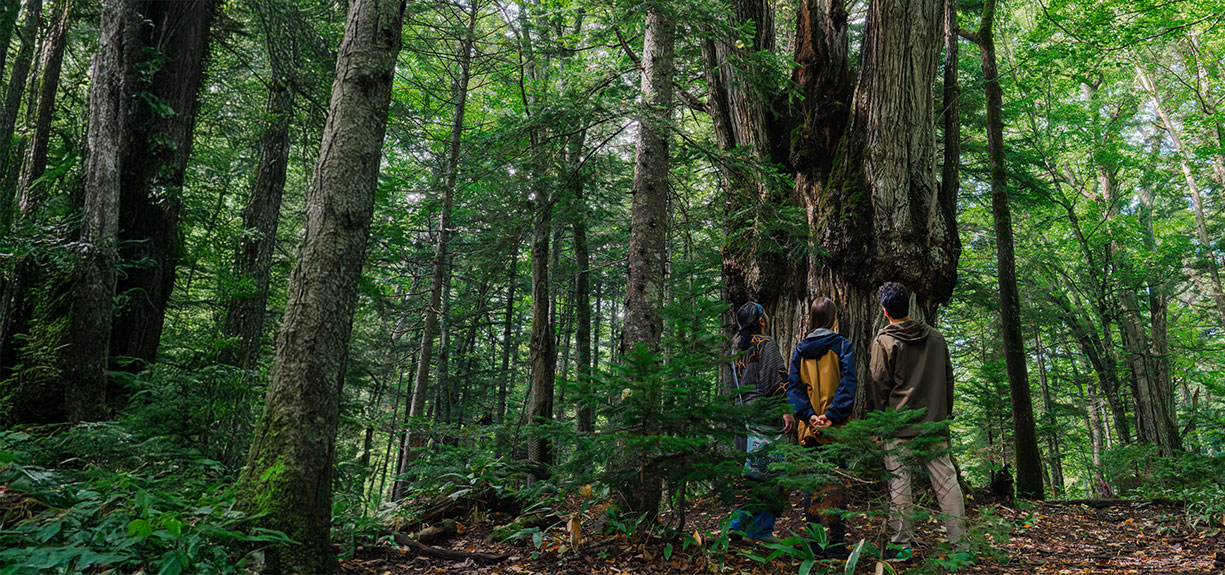
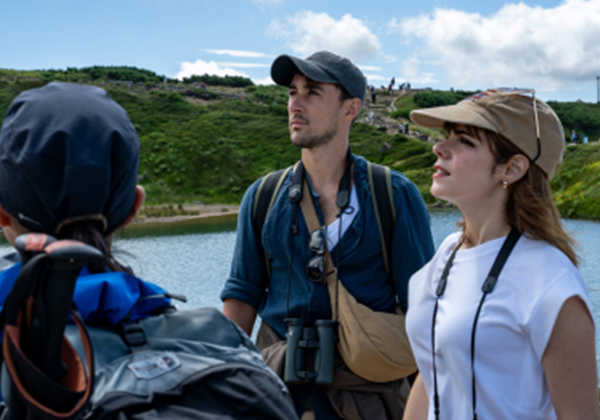
Your journey begins beneath Kamuy Mintara—the garden of the gods—Mosir’s highest and most sacred peak.
Here, the path honours kimun kamuy—not a single deity, but the brown bears themselves, each one revered as a divine being dwelling in the land. Visitors walk with care, receiving a wilderness briefing and keeping respectful distance.
This is not simply a hike—it is a return to being held by nature, to quiet dependence on something greater.Volcanic forces below and alpine chill above shape a mosaic of highland flora and wetlands. Sustainability here is not a concept but a lived recognition of what cannot be made—only honoured.
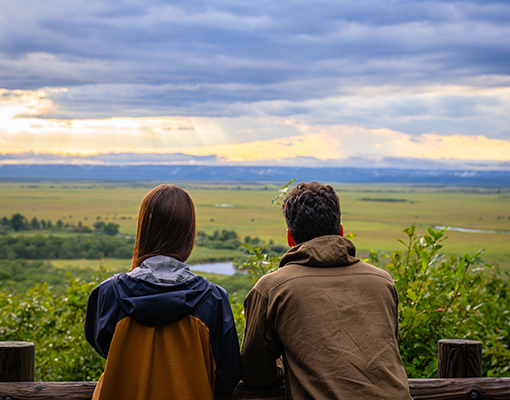
Begin with a sweeping view of Mosir’s vast landscape. Then step into the Ainu spiritual world, rooted in harmony with nature.
Daisetsuzan Nature Tour
Journey to the summit of Kamuy Mintara
Tour DAY 3

Shiretoko
Where the Sacred Peninsula Breathes: A Journey with Kimun Kamuy
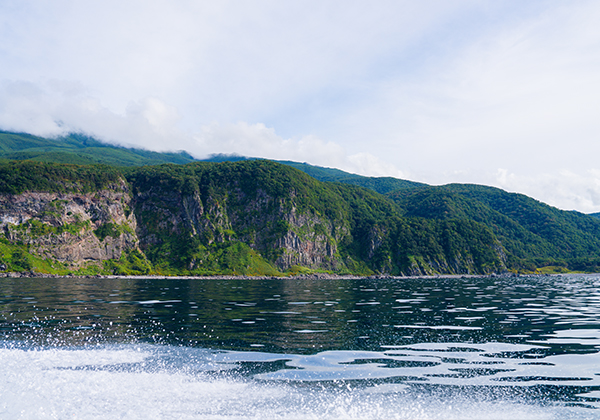
Shiretoko is a place of awe—where dramatic cliffs meet the sea and brown bears roam ancient forests. Recognised as a UNESCO World Heritage Site, it is among Japan’s most coveted destinations. Yet its significance goes beyond beauty.
This peninsula has been inhabited since the Jōmon era (c. 14,000–300 BCE), when early hunter-gatherers formed deep spiritual ties with land and sea. Centuries later, it became a cultural crossroads where Okhotsk maritime traditions (5th–9th centuries CE) merged with the evolving Ainu civilisation.
Remarkably, until just a century ago, Shiretoko remained largely untouched—a rare testament to coexistence between people and nature.
Aboard a small boat, you’ll trace the shifting coastline, entering waters unreachable by larger vessels. In these quiet inlets, raw cliffs and fleeting wildlife invite a visceral dialogue with the land.
As you drift through this mysterious terrain, you may sense the presence of kimun kamuy—the name given to all brown bears in Ainu belief, revered as forest guardians and symbols of nature’s quiet grace.
Transfer from Daisetsuzan to Shiretoko
Shiretoko Cruise Tour
Encounter dynamic wildlife along the sacred
cliffs of the divine peninsula
– Overnight stay in Shiretoko
Tour DAY 4

Shiretoko Nature Tour
A breathtaking journey through ancient forests
– Transfer from Shiretoko to Teshikaga
Lakeside stay on the shores of Lake Kussharo
(2 nights in Teshikaga)
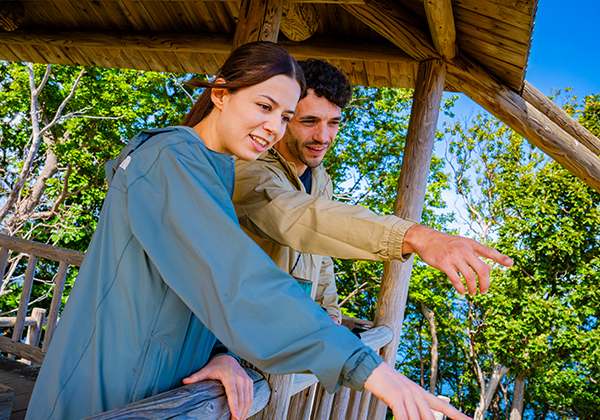
Tour DAY 5

Teshikaga
A Land Where Volcano, Forest, and Lake Become One
Japan’s largest caldera lake—Lake Kussharo—nurtures a story of water that flows onward, becoming the cradle of life in the Kushiro Wetlands.
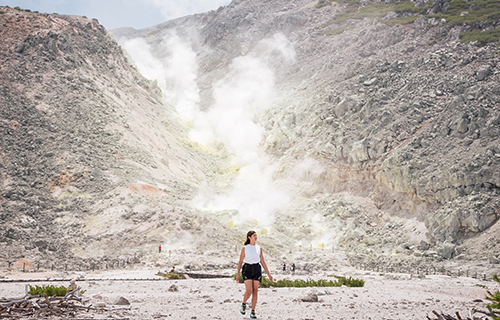
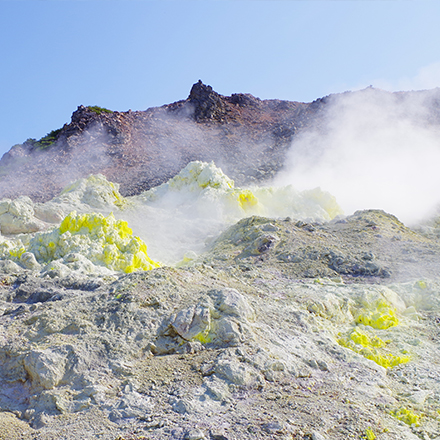
Drawn by untouched nature and the gentle currents of kamuy’s sacred waters, you’ll find yourself immersed in a serene lakeside stay and a leisurely canoe cruise. Across the water, Mount Iō—Atosanupuri—erupts with sulphuric steam and the rumbling breath of the earth, offering you a visceral encounter with volcanic energy.
After your outdoor adventures, a sauna and onsen retreat awaits—an exquisite escape from the bustle of city life. Embraced by forest, volcano, and lake, you pause at this tranquil midpoint to soothe your body and reflect on the journey you’ve shared so far
Teshikaga Nature Tour & Sauna Retreat
A Journey Through Volcanoes, Forests, and Lakes

Tour DAY 6

Akan
Rooted in Forest and Spirit: A Way of Living in Harmony
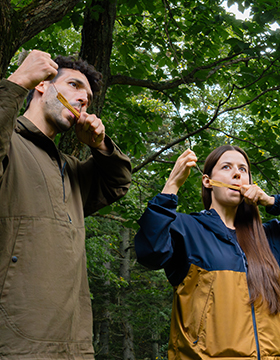
In the forests of Akan, Ainu woodcarving is more than craft—it is a spiritual dialogue with nature, honouring kamuy, divine beings embodied in animals, trees, and rivers. Each carved form reflects a philosophy of coexistence and reverence.
Akan Ainu Kotan is home to artists who carry this legacy forward, sharing the spirit and stories of Ainu culture.
Alongside these living traditions is a lesser-known chapter. During a time of change, samurai from Satsuma—moved by Hokkaido’s forests and Indigenous wisdom—chose to protect what they had come to respect, marking an early recognition of cultural and ecological value.
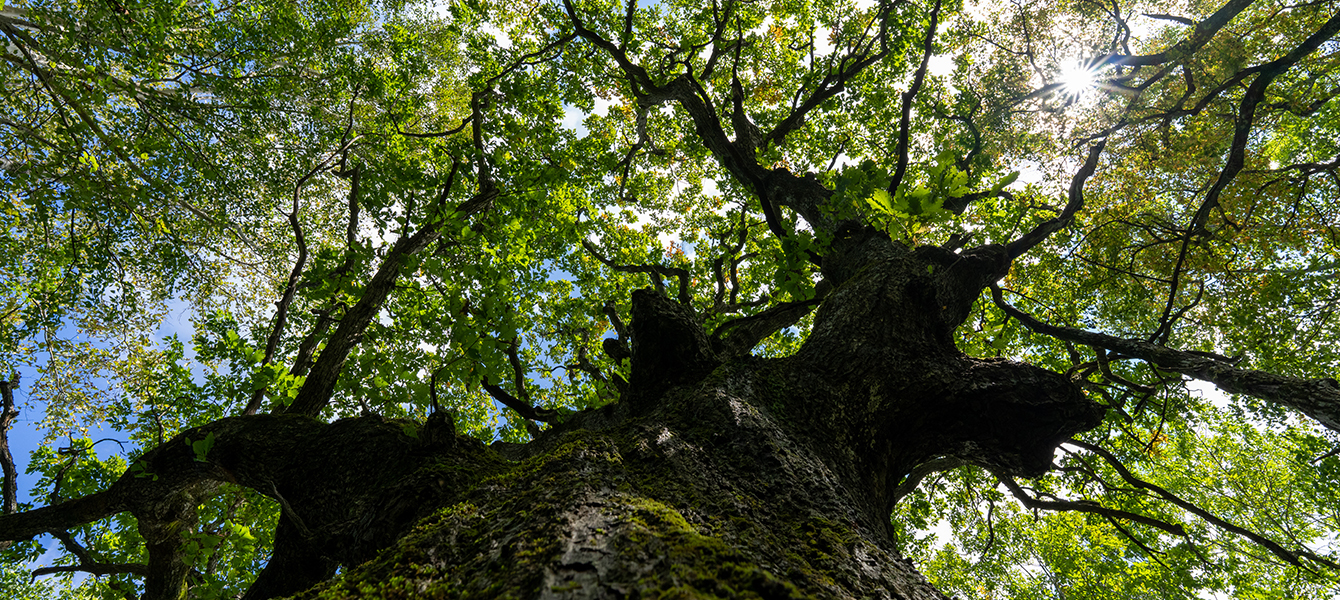
That spirit lives on in the “Forest of Light,” where memory and meaning quietly endure. In this serene woodland, woven with sunlight and silence, we encounter the meeting point of past and present—and reflect on values worth passing on
From Teshikaga to Akan, then onward to Tsurui Village
Akan Ainu Guided Tour
Living Dialogues with the Forest
From Akan to the Kushiro Wetlands
– Two Nights in Tsurui
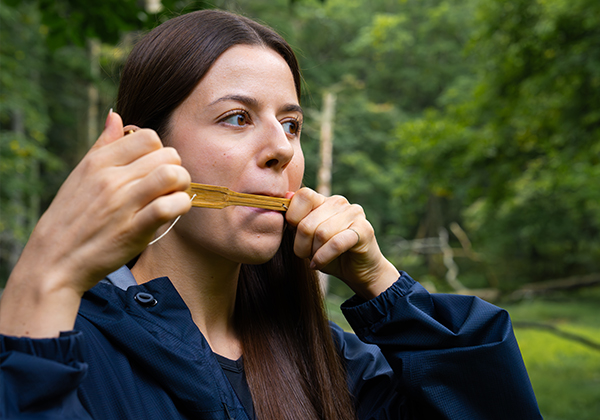
Tour DAY 7

Kira-kotan
Where Mist Conceals, Life Breathes, and the River Finds the Sea
What does the true spirit of Hokkaido look like?
This journey begins in Kira-kotan, a hidden wetland where mist veils the land and life pulses quietly beneath. Nature guide and photographer Makoto Ando—renowned for capturing “miracles of the everyday”—leads guests into Hokkaido’s living story. As an interpreter of nature and humanity, he shares insights into the evolving relationship between people and land.
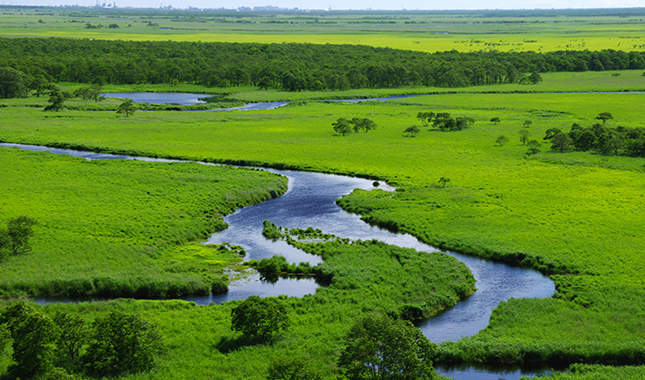
The stage is Kushiro Wetland, the “land of water.” Access to its deepest reaches is limited to certified guides, offering a rare chance to witness life unfolding in its purest form.
Through Ando’s lens, guests explore nature’s principles, its messages, and the quiet philosophies of those who live in harmony with it.
This is the gateway to the Journey Through Mosir—a true beginning to a profound and enduring story.
Kushiro Wetlands Nature Tour
Exploring Hokkaido’s Landscape through
Nature, History, and Human Stories
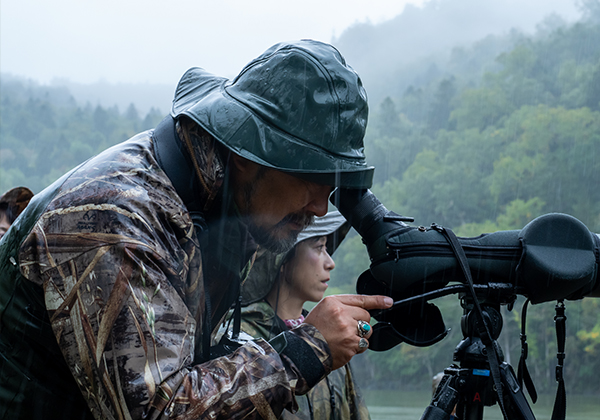
Tour DAY 8

Departing from Tsurui Village
– Returning via Kushiro Airport